1. Introduction: Why Use the Sapporo Subway?

If you are visiting Sapporo for the first time, the Sapporo Subway is the easiest way to explore the city. It’s fast, reliable, and simple—even if you don’t speak Japanese.
1-1. Overview of the Subway Network
- The Sapporo Subway has three main lines:
- Namboku Line (Green)
- Tozai Line (Orange)
- Toho Line (Blue)
- These lines connect major areas like Sapporo Station, Odori Park, Susukino, and the Sapporo Dome area.
- All stations have English signage, making it easy to navigate.
1-2. Benefits for Travelers (Convenience, Speed, Coverage)
- Fast and Frequent: Trains run every 5–7 minutes during the day.
- Weather-Proof: Especially helpful in winter—no need to walk in snow.
- IC Card Friendly: You can use Suica, Kitaca, PASMO, and other cards without buying paper tickets.
- Affordable: Fares start from about ¥210 per ride.
- Safe and Clean: Stations are well-maintained and safe for solo travelers and families.
👉 Tip: The subway connects to buses and JR trains, making it the best hub for exploring all of Sapporo.
2. Subway Lines and Major Stations
The Sapporo Subway is made up of three color-coded lines that cover the city’s main attractions and neighborhoods. Here’s how to understand each line and the most important stations.
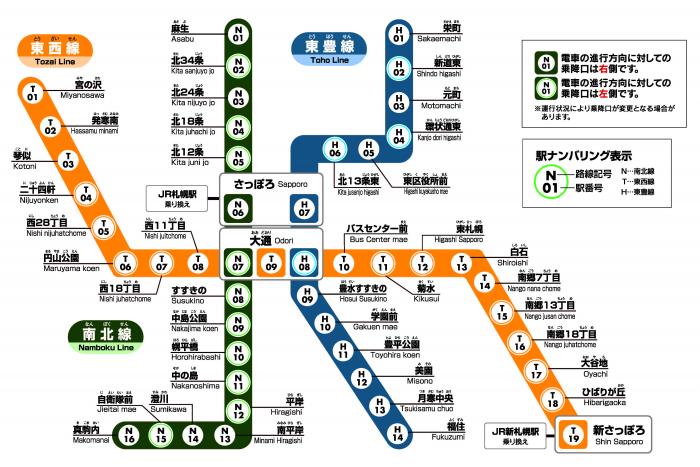
2-1. The Three Lines: Namboku, Tozai, and Toho
- Namboku Line (Green)Runs north to south, connecting Sapporo Station with Susukino and Nakajima Park.👉 Perfect for shopping, nightlife, and sightseeing.
- Tozai Line (Orange)Crosses the city east to west, linking Odori Park, Maruyama Park, and Shiroishi.👉 Convenient for exploring cultural sites and residential areas.
- Toho Line (Blue)Runs northeast to southeast, connecting Sapporo Dome and university districts.👉 Best for accessing sports events and some suburban attractions.
2-2. Key Transfer Stations (Odori, Sapporo, Susukino)
- Odori Station
- The main hub where all three lines connect.
- Close to Odori Park, the TV Tower, and festivals.
- Sapporo Station
- Links the subway and JR trains, including trains to Otaru and New Chitose Airport.
- Major shopping malls and hotels nearby.
- Susukino Station
- Heart of Sapporo’s nightlife and dining scene.
- Direct access to restaurants and entertainment.
2-3. Important Stops for Tourists
| Station | Attraction Nearby |
|---|---|
| Sapporo | JR Station, Daimaru, Paseo Shopping |
| Odori | Odori Park, TV Tower, Snow Festival |
| Susukino | Nightlife, Ramen Alley |
| Maruyama Koen | Maruyama Park, Hokkaido Shrine |
| Fukuzumi | Sapporo Dome (sports and concerts) |
👉 Tip: Most attractions are less than a 5-minute walk from subway exits.
3. How to Buy Tickets or Use an IC Card
Using the Sapporo Subway is simple—whether you prefer paper tickets or IC cards, you can get started in just a few minutes.
3-1. Single Ticket vs. Day Pass Options
- Single Ticket
- Buy at ticket machines near station entrances.
- Price depends on distance (usually ¥210–¥380).
- Good for short trips or occasional rides.
- One-Day Pass
- Unlimited rides on all subway lines for one day.
- Adult: ¥830
- Child: ¥420
- Best for visiting many places in a day.
- Donichika Ticket
- Unlimited rides on Saturdays, Sundays, and national holidays.
- Adult: ¥520
- Child: ¥260
- Great value for weekend trips.
💡 Tip: Day passes can be purchased at machines or station offices.
3-2. Using Suica, Kitaca, and Other IC Cards
- Suica, Kitaca, PASMO, and other major IC cards all work in Sapporo.
- Just touch your card on the reader at the gate when entering and exiting.
- Fares are automatically deducted.
- No need to buy a paper ticket each time.
👉 Tip: IC cards can also be used on buses, trams, and in most convenience stores.

3-3. Where to Buy and Recharge Cards
- Ticket Vending Machines:
- Available in English.
- Can issue and recharge IC cards.
- Station Counters (Midori-no-Madoguchi):
- Staff can help you buy or top up your card.
- Convenience Stores:
- 7-Eleven, Lawson, and FamilyMart can recharge your IC card at the cashier.
4. Entering and Exiting the Gates
Once you have your ticket or IC card, using the gates is easy. Here’s a step-by-step guide so you don’t get stuck.
4-1. How Ticket Gates Work
- IC Card Users
- Touch your card to the blue sensor on top of the gate.
- The balance will be displayed.
- Walk through when the gate opens.
- Paper Ticket Users
- Insert your ticket into the slot at the front.
- The gate will return your ticket at the other side—don’t forget to take it!
- Insert the ticket again when you exit.
💡 Tip: If the gate beeps and won’t open, don’t panic—just move to the side and ask station staff.
4-2. What to Do if Your Card or Ticket Doesn’t Work
- If your IC card has insufficient balance, the gate will close.
- Look for a fare adjustment machine (精算機) near the gates:
- Insert your card or ticket.
- The screen will show how much you owe.
- Pay the difference in cash.
- If you lose your ticket, speak to the staff at the counter.
4-3. Fare Adjustment Machines
- Located beside the gates in all stations.
- English instructions are available.
- You can also recharge your IC card here if needed.
👉 Tip: Keep your card or ticket handy until you leave the station—you need it to exit.
5. How to Read Signs and Maps
Sapporo’s subway stations are designed to be user-friendly—even if you don’t read Japanese. Here’s how to find your way easily.
5-1. English Signage and Route Maps
- All stations have bilingual signage in Japanese and English.
- Look for:
- Line Colors: Green (Namboku), Orange (Tozai), Blue (Toho).
- Station numbers (e.g., N08, T09)—very helpful for navigation.
- Route maps are posted near ticket machines and platforms.
- Digital displays show the next trains and destinations.
💡 Tip: Take a photo of the route map or download a PDF before your trip.
5-2. Color-Coding of Lines
- Each line uses clear colors:
- Namboku Line = Green
- Tozai Line = Orange
- Toho Line = Blue
- Station signs and arrows always match these colors, making it easy to follow directions.
5-3. Tips for Navigation
- Platforms have clear arrows and signs for exits and transfers.
- Exits are numbered (Exit 1, Exit 2, etc.)—these numbers help you find the right street or landmark.
- Some stations are large (e.g., Odori, Sapporo Station)—allow extra time to transfer.
👉 Pro Tip: Use Google Maps or NAVITIME—they show real-time subway information and exits.
6. Subway Etiquette and Useful Tips
Using public transportation in Japan comes with some unique customs. Here are important etiquette points and helpful tips to make your ride smooth and respectful.
6-1. Priority Seats and Behavior
- Priority seats (“優先席”) are reserved for:
- Elderly passengers
- Pregnant women
- People with disabilities
- Parents with small children
- If you sit in these seats, be ready to give them up when someone needs them.
- Keep your phone on silent (“manner mode”) and avoid loud conversations.
6-2. Handling Luggage and Strollers
- Try to hold your bag or backpack in front of you to save space.
- Large suitcases should be placed beside your seat or in luggage spaces.
- If you have a stroller, use elevators or wide gates, and lock the wheels while riding.
6-3. Avoiding Crowds and Rush Hours
- Peak hours are:
- 7:30–9:00 AM
- 5:00–7:00 PM
- Trains can be crowded—plan around these times if possible.
- If you must travel during rush hour, allow extra time and expect standing room only.
👉 Tip: Even during busy periods, people line up in order. Join the queue and wait patiently.
7. Summary: Riding the Sapporo Subway with Confidence 📝
The Sapporo Subway is one of the most convenient ways to explore the city, whether you’re here for sightseeing, shopping, or business.
By understanding the basics—how to buy tickets or use an IC card, navigate stations, and follow local etiquette—you can ride with confidence.
✅ Key Takeaways
- Three Lines: Namboku (Green), Tozai (Orange), Toho (Blue).
- IC Cards Recommended: Suica, Kitaca, and PASMO work seamlessly.
- Day Passes: Great value if you travel a lot in one day.
- English-Friendly: Signs and machines are available in English.
- Be Respectful: Follow quiet etiquette and priority seating rules.
Whether you’re traveling alone, with family, or in a group, the Sapporo Subway makes it easy to discover all the highlights this wonderful city has to offer.
Enjoy your journey and have a fantastic time in Sapporo!